Trademark Law Alert -- A Consent Agreement Walks the Plank
When unrelated parties seek to register and make simultaneous use of similar marks that face a possible finding of a likelihood of consumer confusion, an appropriate “consent agreement” between them may sometimes resolve that issue.
The U.S. Court of Appeals for the Federal Circuit (Federal Circuit) has recognized that the parties themselves are better positioned than bureaucrats or judges to know the real-life situation and to have assessed marketplace conditions. Therefore, depending on the circumstances, the Federal Circuit has opined that consent agreements may carry great weight.
However, the Trademark Trial and Appeal Board (TTAB), in a precedential opinion about marks for merchandise related to a pirate festival, rejected a specific consent agreement as being an inadequate “naked consent.”
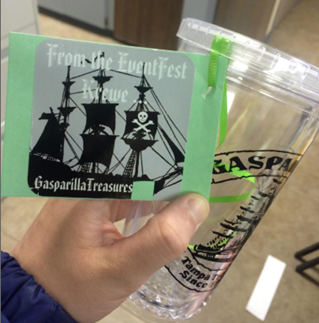
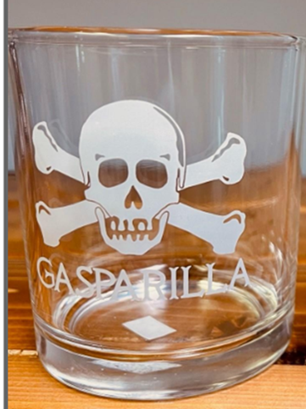
Registrant’s Specimen of Use Applicant’s Specimen of Use
in Class 21 in Class 21

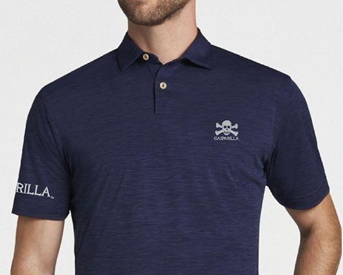
Registrant’s Specimen of Use Applicant’s Specimen of Use
in Class 25 in Class 25
Background
If a party merely consents to the use and registration of a confusingly similar mark by an unrelated party, that naked consent may destroy the consenting party’s exclusive trademark rights because the mark may no longer indicate goods or services coming from, or controlled by, a single source.
The trademark owner normally may avoid this pitfall by a license grant to the user with quality control requirements so that the nature and quality of the licensee’s goods or services remain under the theoretical control of the mark’s owner as the single source.
However, the parties may wish to maintain their separate ownership of their respective marks and avoid one party’s exercise of quality control over the activities of the other. If both parties reasonably believe that the simultaneous use and registration of their marks can be made without being likely to cause confusion, they may maintain that independence by entering into a properly drafted consent agreement having appropriate limitations on the activities of each party.
The Federal Circuit’s guidance for determining the acceptability of a consent agreement includes five non-exclusive factors to consider:
1. Does the consent show an agreement between both parties;
2. Does the agreement include a clear indication that the goods (or services) travel in separate trade channels;
3. Do the parties agree to restrict their respective fields of use;
4. Will the parties make efforts to prevent confusion, and cooperate and take steps to avoid any confusion that may arise in the future; and
5. Have the marks been used for a period of time without evidence of actual confusion?
Facts
Gasparilla is the geographic name of a barrier island in southwest Florida. It also refers to the annual Gasparilla Pirate Festival in Tampa, Florida (where both parties are located), which celebrates an invasion by the mythical pirate José Gaspar, also known as Gasparilla.

Applicant sought registration on the Supplemental Register of GASPARILLA for goods including drinking glasses in Class 21, and t-shirts and hats in Class 25. The Supplemental Register signifies nonexclusive rights in descriptive marks capable of acquiring distinctiveness, after which the rights can become exclusive.
The Examining Attorney partially refused registration based on a likelihood of confusion with an existing registration of the mark GASPARILLA TREASURES on the Principal Register (with the exclusive right to use TREASURES disclaimed), for identical goods in the same two classes. The Principal Register signifies exclusive rights in marks that either are inherently distinctive or have acquired distinctiveness.
Applicant appealed the refusal to register its mark. At various times, Applicant presented inconsistent arguments to the TTAB that it had licensed the mark to Registrant, or that Registrant would assign the mark to Applicant. There was no evidence to support either argument, so the TTAB did not regard the ownership issue as being before it.
In the end, Applicant submitted and relied solely on a one-page Consent Agreement signed by both parties. The TTAB considered whether or not the Consent Agreement was adequate in the situation that the marks were highly similar, the goods in part were identical or legally identical, and the goods were presumed to move through the same channels of trade to the same classes of purchasers.
Consent Agreement
The Consent Agreement in this case essentially provided conclusory statements that:
- Registrant consented to the registration and use of Applicant’s mark;
- Registrant agreed not to challenge Applicant’s use or registration of Applicant’s mark or its validity or ownership;
- The parties agreed that there had not been and would not likely be a likelihood of consumer confusion resulting from the simultaneous use and registration of the parties’ marks; and
- In the unlikely event that either party becomes aware of any actual consumer confusion, that party would advise the other, and the parties would take commercially reasonable steps to address the confusion and prevent its future occurrence.
The TTAB found that this Consent Agreement suffered from multiple failings:
- No agreement that the parties would sell in separate trade channels or otherwise restrict their fields of use;
- No agreement to refrain from use of one’s mark on the goods of the other; and
- No provision for the actual manner of display of the marks (such as use with house marks);
- No explanation in detail, rather than a simple recitation, why the parties believed confusion was unlikely;
- No description how the parties would avoid confusion; and
- No indication of the period of time of the simultaneous use of the parties’ marks without actual confusion (which the TTAB calculated to be only about one year).
In short, the TTAB held that the Consent Agreement contained little more than the Registrant’s naked consent to the Applicant’s use and registration of its mark, and the parties’ conclusory belief that confusion was unlikely, without specific details as to the steps the parties would take to achieve that result. This might be sufficient in other factual settings, but here it did not outweigh the factors that the marks were virtually identical, and that the goods, trade channels, and purchasers were identical.
Accordingly, the TTAB upheld the finding of a likelihood of confusion, and it affirmed the refusal to register Applicant’s mark as to the goods in the two classes at issue.
In re Ye Mystic Krewe of Gasparilla, Application No. 90522364 (T.T.A.B. October 14, 2025).
For further information, please contact William M. Borchard or your CLL attorney.

Senior Counsel
Email | 212.790.9290
Bill has handled domestic and international trademark and copyright matters at the highest level for over 60 years. He has counseled and represented clients on domestic and international trademark matters concerning clearance, registration, proper use, licensing, contested administrative proceedings and infringement claims. He became Senior Counsel in January 2024 and is now focusing on providing guidance and advice to other lawyers within our firm and writing informative and engaging articles on intellectual property law developments.